
Mayors and Planners Certify 14 More Station Area Plans, Contributing to 75,000 New Homes Near Transit
October 23, 2025
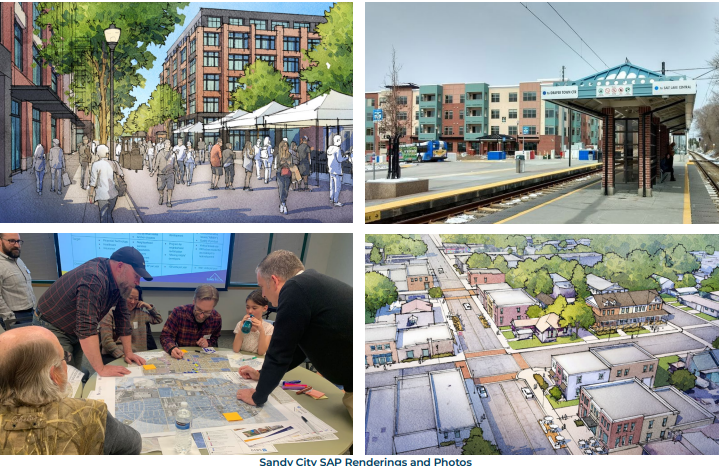
As Utah continues to face rapid growth, local leaders are showing what coordinated, community-driven planning can achieve. Today, the Wasatch Front Regional Council (WFRC) officially certified 14 new Station Area Plans (SAPs) guiding development around rail and bus rapid transit stations throughout the region — bringing the total to 72 certified plans that together pave the way for more than 75,000 new homes near transit.
SAP certification is the final step in a rigorous, collaborative process among WFRC, the Mountainland Association of Governments (MAG), the Utah Transit Authority (UTA), and local governments. Supported by 2022 state legislation (HB462), the SAP process ensures development around transit stations promotes four key outcomes:
- Expands housing availability and affordability, including moderate-income options.
- Promotes sustainable environmental conditions.
- Enhances access to jobs and services.
- Increases transportation choices and connections.
Examples of today’s certified SAPs:
- Draper: A new tech high school near the FrontRunner Station, expanding educational access and nearby housing.
- Woods Cross: New bike and pedestrian crossings over rail lines, improving safety and mobility.
- West Valley City: 1,380 new homes near three TRAX stations — River Trail, Redwood Junction, and Decker Lake — creating more attainable housing choices close to work and amenities.
These plans build on the success of the Wasatch Choice Vision — Utah’s shared vision for aligning transportation, land use, and economic opportunity. That effort has already delivered visible results:
- Homes in Wasatch Choice City and Town Centers have doubled since 2010 — from 75,000 to 150,000.
- Centers help reduce miles driven by an estimated 800,000 per day.
- Centers save an estimated 11 billion gallons of water each year.
“These Station Area Plans are proof that communities can plan for growth in ways that improve life for residents,” said Andrew Gruber, WFRC Executive Director. “By connecting homes, jobs, and transportation, these plans help people spend less time in traffic, use less water, and have more choices for where and how they live.”
“The City and Town Centers around our region are the hearts of our communities,” said WFRC Chair Mayor Dawn Ramsey (South Jordan). “These are places where people can live, work, play, dine, and shop. They help to enhance quality of life, even as we grow.”
Station Area Plans are a tangible example of how local planning and regional coordination can deliver real, measurable results — expanding housing options, improving transportation connections, and strengthening Utah’s quality of life. Together, these Station Area Plans demonstrate that Utah is not just planning for growth — it’s shaping it, ensuring that the communities of tomorrow remain connected, vibrant, and livable.