Active Transportation
Traditional Transportation Choices
Biking and walking typically fall under the term active transportation, but any form of travel powered by the human body such as using a wheelchair, skateboarding, scootering, or roller-blading is active transportation as well.
There are many community and individual benefits to active transportation, including increased wellness and social connectedness, travel cost savings, mobility independence, reduced environmental impact, and improved air quality. Additionally, every time you opt to walk or bike rather than travel in your car, there is one less car on the road – making it easier for those who have to drive to get around. See the Utah Active Transportation Benefits Study for more information on benefits and best practices.
Supporting active transportation is consistent with all of the Wasatch Front Regional Council’s Wasatch Choice Vision goals. WFRC participates in many active transportation planning efforts, understanding that travel choices are critical to maintaining and building an efficient and integrated transportation system for the region. The Transportation and Land Use Connection program provides funding to local governments to develop active transportation plans and the Active Transportation Committee involves regional stakeholders to provide guidance on bicycle and pedestrian planning issues. All active transportation planning efforts undertaken involve partners such as the Utah Department of Transportation, Utah Transit Authority, WFRC member counties and cities, state and local health departments, and state and local advocacy groups.
Explore the Wasatch Front's Bikeways
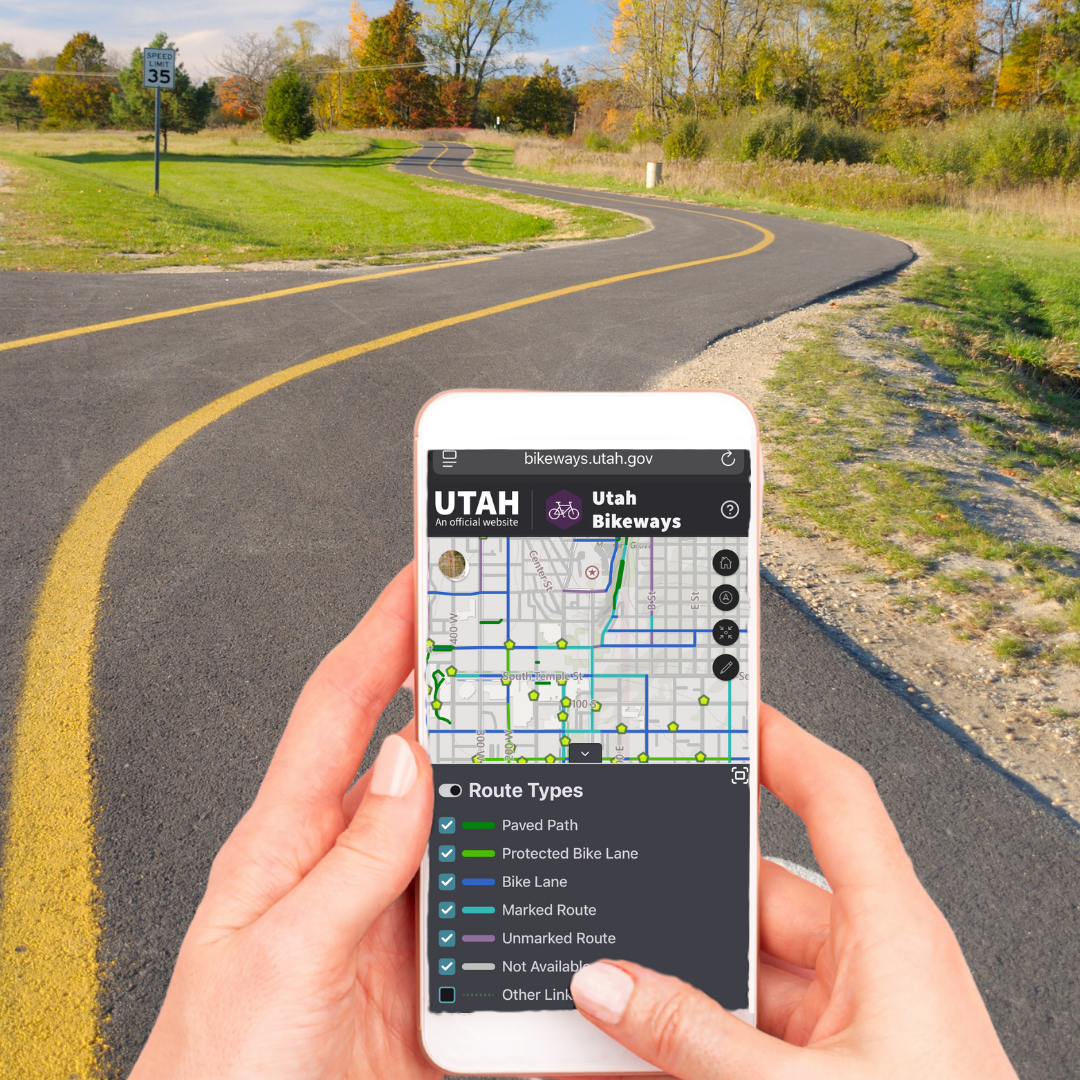
The new bikeways.utah.gov interactive map highlights the current Wasatch Front bicycling network to help residents and visitors take advantage of these bike-friendly facilities for both transportation and recreation. On the map, users can view paved trails, different types of bike lanes, and other on-street bike designations, and an estimated level of comfort for different experience levels.
Importantly, this tool also allows users to provide feedback that will help keep the map current. Are you proud of a new or upgraded bikeway that just opened in your community? Or do you see something that is missing on the map? Just click on the map and submit your suggestions for review and inclusion. Your feedback will help provide better information to the public and to the organizations that use current conditions to develop plans and prioritize future additions to the bike network. Please share this resource with others! The more people who use the map, the better it will be.
The bikeways map is hosted by the Utah Geospatial Resource Center (UGRC), the State's GIS coordination office, in partnership with WFRC and Utah's transportation planning agencies.
2023-2050 Regional Transportation Plan
The 2023-2050 Regional Transportation Plan (RTP) focuses on planning a bicycle network that is both safe and convenient for users. Where possible, family-friendly facilities that separate bicycles from vehicle traffic are planned in the style of similar projects such as Grant Avenue Promenade in Ogden and the Denver & Rio Grande Western Rail Trail in Weber & Davis Counties that fulfill regular trips and recreational uses. Additionally, the RTP focuses on regional connections to ensure that origins and destinations are conveniently linked together along with improved connections to transportation services, such as bus and rail.
Since the RTP is a long-range plan, envisioned active transportation projects identified in the RTP may evolve over time. During project development, context sensitive solutions will be considered to build out the preferred solution. Further jurisdiction coordination, deployment of interim designs, or phased implementation may be necessary until complete redesign or reconstruction of the roadway and active transportation facility occurs, and/or additional right-of-way can be acquired.
Overall, the 2023-2050 RTP places a growing emphasis on active transportation, considering access, convenience, and safety of bicycle users as well as integrating facilities within roadway and transit projects.
Active Transportation Plan Standards
Bicycle Friendly Business
Golden Spoke Rides and Event
Key Resources

Contact
For additional information, please contact:

Hugh Van Wagenen
Active Transportation Planner